Saturday, May 28, 2022

Detroit River Carp Fishing

Greetings carp fishing fans. 

I hope you all get a chance to get out soon and enjoy some fishing. 

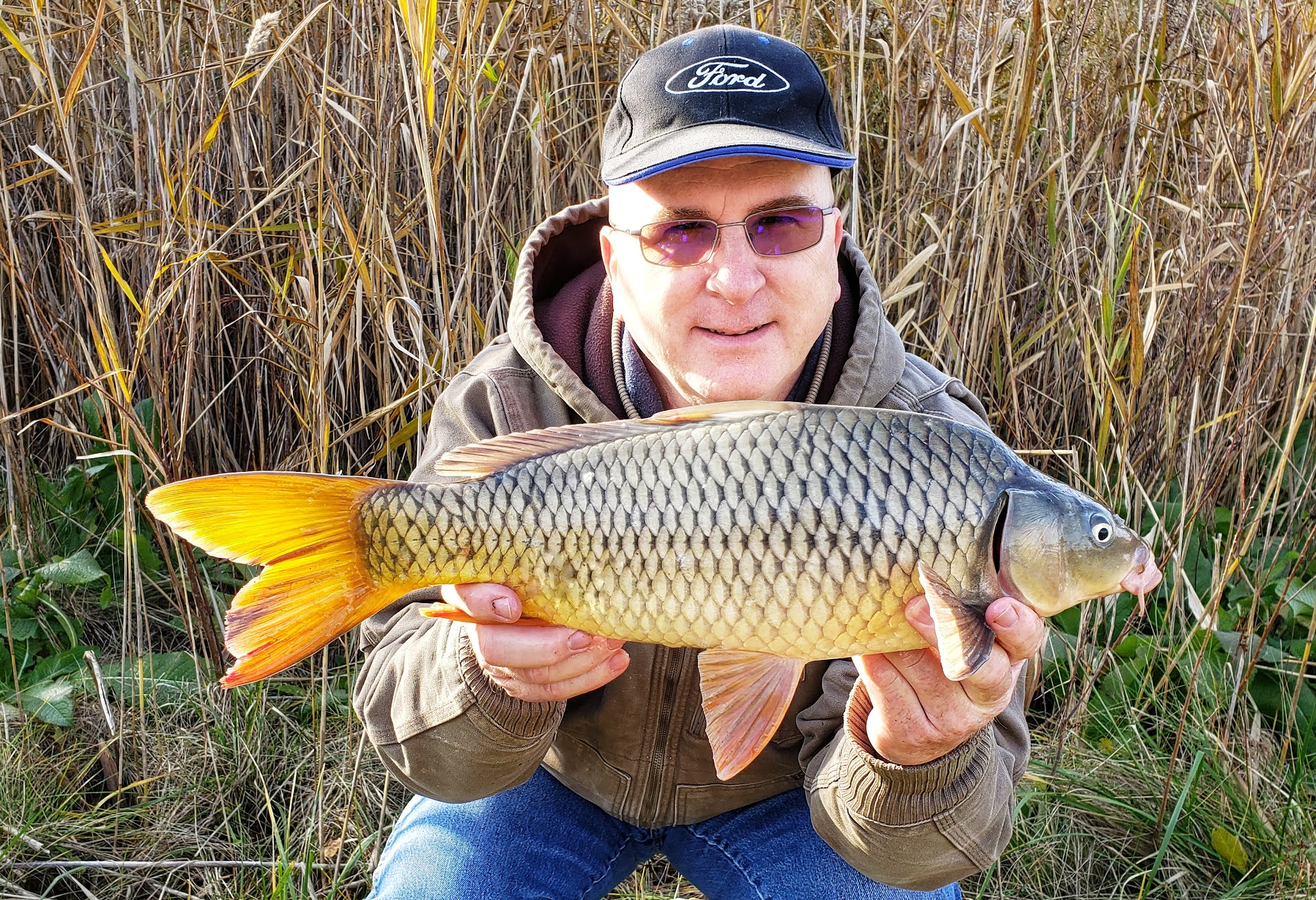
The weather today was fabulous and the fish were biting at the Detroit River this morning. I ended up with about 10 carp ranging from fair to midland, but with 4 fish between 6 a.m. and 7 a.m and netting 3 of them singlehandedly over a railing about 8 feet from the water, it kept me entertained. 

If you haven't fished the river, you should try it. Find a current break and start casting. You might get a surprise or two. 

My largest Detroit River carp is 26# and second best is 24#. Most will probably be 10 - 12 pounds unless you find some spots I haven't discovered yet. (I don't prebait. I just show up and start fishing.)

Here are some pics. 

Detroit River Carp Fishing
Fun day fish for carp


Monday, May 23, 2022

Michigan Carp Anglers Kids Fishing Event

Save the date!!!!!

Get ready for the "Reel Fish Reel Fun" kids Carp fishing day coming back to Gallup park (3000 Fuller Rd Ann Arbor, Mi 48105) on Saturday June 11th. From 7am until 5pm.

We will be setup all the way at the back of the park, in the last parking lot, near the big playground.

The goal is to share the sport of catch and release Carp fishing with our younger generation and see the smiles as they catch some truly big fish.

All necessary fishing gear such as fishing poles, nets, bait, etc., will be provided. Please join us for a fantastic day of fishing on the Huron river. 

Here are a few pictures from previous events:


Presented by

American Carp Society

Hunters For Life

The Bait Shop

Dip Net Bait & Tackle

The Carp Anglers Group

Michigan Carp Anglers

Saturday, May 14, 2022

10 Reasons to Learn How to Fish

 1. Fishing is a great way to relax and unwind after a long day at work.

2. Fishing can help you get away from your daily routine and enjoy some time alone.

3. You can use fishing as a form of exercise and stay fit.

4. Fishing helps you develop patience and concentration skills.

5. You can make friends while learning about other cultures.

6. Learning how to fish teaches you valuable life lessons.

7. You can have fun with your family and friends.

8. You can spend quality time with nature.

9. You can teach others how to fish.

10. Fishing is a good hobby that can lead to a career.


Friday, May 13, 2022

12 Ways to Find a Great New Fishing Spot

Ninety-nine percent of this post was written using artificial intelligence and is generally 99 percent "good", just like location and timing is 99 percent of successful fishing.

These tips for finding a new fishing spot are generally pretty good for computer generation. But then again, maybe we shouldn't be that surprised because the search engines know what successful fishermen are looking up on the internet. Compiling that info is what makes the internet viable in the first place.

1. Find a place where fish are actively feeding.

Fish are attracted to areas that have food sources nearby. If you want to catch fish, look for places where they are feeding. This can include shallow water near shorelines, deep holes, or even large rocks.

2. Use lures.

Lures are baits designed to attract fish. You can use them to attract specific species of fish that respond to activity and movement. Aggressive fish like bass, pike, and muskie are attracted to lures. Lures come in many different shapes and sizes. Some common types of lures include spinnerbaits, crankbaits, jigs, and buzzbaits.

3. Cast your bait slowly.

When casting a lure, make sure not to cast too fast. If you do this, you may lose control over the lure, lose accuracy, and it could end up missing your target location. Instead, cast your lure at a slower, more deliberate pace.

4. Check the weather forecast. 

Weather affects everything. If the weather is going to be bad, then you might want to avoid fishing. But if the weather is going to get better, then you may want to go ahead and head out to your favorite fishing hole. Fish generally bite better during periods the barometer is falling. The weatherman calls this a low pressure system or trend.

5. Find a local expert. 

There are many people who love to fish and they would be happy to share their knowledge with you. Ask around and see who has some advice for you.

6. Go online.

You can search Google for “fishing spots near me” or “best fishing spots near me”. This way, you can easily find out where the best places to fish are located.

7. Use social media.

Facebook, Twitter, Instagram, etc., are great resources for finding out about the latest news regarding fishing.

8. Ask your friends. 

Your friends who fish probably already know where some great fishing spots are. They may even have some tips for you about the best times, locations, things to look out for, etc.

9. Know your fish

Some fish eat other fish, some eat plants, and some eat both, so catching them depends on matching your fishing style, lures, or baits to the types of fish you want to catch. 

10. Find a place where fish like to hang out

Fishing spots may vary depending on what kind of fish you want to catch. If you want to catch trout, then look for places near streams. Trout love to hide under rocks and logs. Look for areas with lots of vegetation.

11. Use bait

Bait is food that attracts fish. Bait can be anything from worms, minnows, or crickets to corn, hominy, and chickpeas. Experiment with different selections and remember to have fun.

12. Ask a DNR or Fish and Wildlife Agent for tips. 

The wildlife agents know some of the best spots and what spots are hot at specific times and seasons.


Sunday, May 8, 2022

14 Tips to Catch More Carp in 2022

This time of year people begin looking for ways to catch more carp. Traffic to carp fishing websites increase for good reason. Carp are one of best freshwater sport fish available to the average angler.


Tips to Catch More Carp in 2022

1. Use a small hook size (6-8)

2. Try to catch them early in the morning

3. Use flavored corn as bait

4. Use at least 20# fishing line

5. Keep your line tight

6. Cast out into deeper water

7. Observe carp that jump and fish in that area

8. Use a loose drag and tighten it as you gain control of the carp

9. Don't let the fish get away from you

10. When you do land a fish, immediately release it back into the water

11. Always check for hook sharpness and sharpen or use a new hook

12. Invest in a sturdy landing net with a metal frame

13. Use a fish friendly net sack mesh

14. Use an unhooking mat to protect the fish from rocks and debris on the bank. A padded yoga mat works pretty well.


Saturday, April 30, 2022

First Carp of 2022

Common carp

Carp in black and white

I caught this small common carp last week. The carp felt like an ice cube when I held it for the photo.

Let's hope the temps return the normal soon.

Saturday, March 12, 2022

Carp Bait Hook Bait Supply for 2022

I picked up some flavored corn and tiger nuts today. I hope we get some sustained sunshine and milder temps this week so can do some fishing soon.


Thursday, February 17, 2022

Quantum Optix Fishing Reels

The Quantum Optix spinning reels aren't dedicated carp reels, but for an affordable price they could be good, respectable reels for a variety of fish species. 

Size 40 and size 60 are still available from Quantum for under $23. Quantum = Zebco. 

There is a 5 year warranty from the manufacturer. The reels hold more than 100 yds of 17 lbs (roughly 65# braid diameter) monofilament according to the manufacturer.


If you prefer a combo package (reel and rod) here's an option around $50 for a fast action, medium, 8' rod. It's not a carp rod, but it looks pretty reasonable for a "starter" set or for someone who only occasionally fishes for carp and doesn't need to cast more than 40 - 50 yds from shore. Quantum has a medium-heavy option if you need to use more than a couple ounces of lead or cast more than 50 yds.

Wednesday, January 12, 2022

Rivers or Lakes for Carp Fishing?

There is a juxtaposition between lake fishing and river fishing among carp fishing enthusiasts. Some carp fishermen prefer lakes over rivers (and vice versa).

  • Catching carp in lakes can be easier than catching carp in rivers. Generally, catching multiple fish of significant size (i.e., greater than 25, 30, or even 35 pounds is more likely in a lake.
  • Catching carp in rivers is a little more complex, and catching carp of larger size is less consistent and requires more of a "hit or miss" approach and a level of "luck."

In lakes, the boundaries remain fixed, and the fish has nowhere to go outside the lake's edges. To catch them, one needs to find their location at a given time and fish at the site. In rivers, the borders stretch in two directions over considerable distances. Of course, the lake's size makes a difference, and the larger the lake, the higher the level of difficulty.

The chief challenge in river fishing for carp outside of the boundaries is the current strength. Lakes might have a small current, but compared to a river, it's usually negligible.

The contours of a lake are generally stagnant and predictable. Outlines of a river can change from week to week and day to day because the current causes a shifting in the items deposited in the river bed. 

In periods of a strong current, things may move from one area to another. And likewise, items may be washed from shore into the river during periods of high water or flooding and deposited downstream, creating unseen and unpredictable snags. 

In lakes, articles are dumped on the lake floor by boaters or other means (i.e., construction crews); however, once they reach the lake bottom, they seldom move more than a few feet from their original location.

In rivers, fish are constantly swimming with or against the moving water, and fish are continually swimming, burning energy, making it more challenging to put on weight and maintain it. 

Food sources constantly move in rivers, and food sources move around less in lakes. Depth is a more prominent factor in locating food sources in lakes since depth contributes to specific location. Once lake fish locate the food, they have an easier time finding it consistently and maintaining weight.

It's a matter of personal preference when deciding whether to focus on the lake fishing or river fishing. Doing a little of both is an excellent strategy to take advantage of the challenges involved with river fishing. Still, carp fishing in lakes usually provides larger fish sizes once you locate them.


Thursday, November 11, 2021

Michigan Urban Carping in November

I couldn't let the Veteran's Day Holiday, a day off, and 63 degree temperatures pass by this late in November without heading out to a local fishing spot ahead of the significant rain coming our way later this afternoon.

I caught a little guy to start and a bigger one just before I finished packing up to leave. 

The water is pretty cold. The second fish felt like it just came from spending time in the freezer. 

With 20 degree overnight temperatures right around the corner, these are likely my last two fish for 2021.

Urban Michigan carp fishing


See you next year cyprinius carpio.


Wednesday, November 10, 2021

Improving Carp Photos with Snapseed

I caught this fish a few minutes after arriving to this remote lake location and making the first cast.

Typically, my preference is to get the lines in the water first and then begin focusing on the smaller things like tidying-up, setting up the landing mat, laying out the weigh sling, etc. and this time I caught the fish before I really wanted to.

I hadn't yet quite had time to consider the best location for taking photos of the catches, which resulted in a poorly lit, rather overly back-lit result.


But with a little practice, the Snapseed app, available on almost any current-model Smartphone, can help improve the result significantly.


A crop here and there; a small amount of sharpening, some white balance adjustments; and the result is significantly better.

Snapseed will never offset everything lost by a poorly lit photo vs. a better planned effort, but its a great help.

Photo tip: Positioning the fish so that the sunlight was to the side with the focal point on the fish's head would have helped improve this photo straight-from-the-camera before any Snapseed edits were performed.

But don't go overboard, because too much of a good thing can be a very bad thing - as in, fake looking fish

This can happen by over-sharpening, using too much contrast, or too much High Dynamic Range abbreviated HDR. Just a few years ago, using HDR techniques was pretty cumbersome requiring overlaying 5 or 6 photos (or more) at various under or over exposure levels (EV or exposure value) to extend the luminosity of the photograph to "improve" upon it. With Snapseed, you can do it with a click of an icon on your Smartphone.

Saturday, November 6, 2021

Poll: To Euro Pose or not To Euro Pose

Since I've been carp fishing these past 8 years or so, I've seen thousands of fish poses. Poses range from hugging the fish with forearms and taking a selfie with one hand to the famous European carp pose where the fish is held over a landing mat with two hands and instead of looking at the camera the fisherman looks instead at the carp's head.

Carp are revered in most of Europe whereas carp fishing is still gaining momentum here in the U.S. Enthusiasm for carp in the U.S. pales in comparison to bass or catfish.

Thousands of dollars and hours are spent in Europe to catch relatively few fish per the level of expense. There just aren't as many carp in European waters and the ones that are caught are often in private lakes owned by a "club" or "syndicate" (think country club or the U.S. version of a sportsman's club).

I chuckle now everytime I see one of the Euro-style photos. They seem a little out of place at times and I get a little uncomfortable at the reverence being displayed.

As for me, I'll stick to looking directly at the camera in my carp photos, but just for fun I'll throw in an Euro pose for some amusement.


Truth be told, when I started carping I tried the European-style poses a few times. My wife made fun of me and busted out laughing several times, so I stopped doing it. :-)

And now for our poll:

Do you use the European-style poses in your own carp photos?

Saturday, October 30, 2021

Black and White Carp Photo

I am playing around a little more with black and white carp photography this weekend.

This was a color photo that I converted using Snapseed.

Black and White Carp Photography

You can add drama, subtract glare, or brighten photos that are otherwise unpleasant. 

Saturday, October 23, 2021

5 Tips to Catch More Carp

Do you want to catch more carp? Join the club. But seriously, I will share 5 definitive tips below that will help beginners (and pro's) catch more common carp and buffalo.

1. Find the snags (or vegetation), and you'll find the carp

If you have ever watched popular Saturday morning bass fishing programs with Bill Dance, Jimmy Houston, Hank Parker, you have heard them preach about bass liking to hang out near cover to ambush their food sources. 

Carp also hang out near the snags like fallen trees and other submerged items. The obstacles provide them cover and, in rivers especially, relief from swimming against the current. The traps offer a "catch-all" for foods that carp like to eat (mussels, organic matter, algae, etc.).


2. Attract the carp with the right baits

Carp prefers organic bait like corn or a boilie (a hard, rolled bread ball). 

Many people fish with artificial lures, and others use plain old red wiggler worms. Carp sometimes bite those items, but less frequently. You don't have to leave it to chance and luck. 

Carp are attracted to organic baits like sweet corn, maize, cooked field corn, etc., and seem to get especially hungry when you offer those baits. Flavored items such as pineapple, butternut, vanilla, blueberry, strawberry, plums, banana, etc., and even whisky or bourbon work well.

3. Don't overfeed the carp

Try not to over bait. One of the quickest ways to struggle, or stop them biting once they start, is to overfeed them. 

Using pack baits for carp fishing uses only enough to cover the lead. If you leave a lot of extra bait in the water, the carp will happily eat the "freebies" and avoid your hook baits. Make sense? 

The more carp in the swim, the more bait you can use; but you can only reel in one fish at a time. (LOL). You never know when carp will begin to leave the swim due to feeling threatened, excessive sunlight, lack of the sun, temperature changes, perceived threats (jet skis, boats, etc.), and a myriad of other possible reasons. To improve your chances with the carp who remain or enter the swim, try not to overfeed with "free" food/bait later on.


4. Be ready when they bite

The worst thing to happen when you get a carp to bite your hook is being unprepared. 

Have your net set up, the drag on the reel set correctly (not too tight, not too loose). Use sharp hooks, select a good line (25# monofilament or 50# braid are good starting points), and the correct rod type (with a light action tip). Use a hair rig, aka "knotless knot," to present your hook bait. Try not try to muscle the carp to shore. Any one of these areas being below par reduces the chances for a successful capture.

5. Fight the carp with a lighter drag

You will get the hang of the proper amount of pressure to apply to the fish with experience, but less drag is better than too much drag. Too much drag can cause a hook-pull and a lost opportunity to land a carp. 

Imagine having a 30# (or bigger) carp on the line and losing the potential fish of a lifetime due to faulty technique. Make sure you understand how the drag functions on your particular reel. I like to start with a loose drag and then tighten it periodically as I reel in. I can sense the strength/energy of the fish as I reel in and tighten or loosen the drag as needed.

A Pair of Common Carp

A couple of Michigan common carp caught near Lake Erie.

This spot used to be a very popular Southeastern Michigan venue for carp fishing, but after commercial fishing cleaned it out a few years ago it's lost a lot of it's shine and curb appeal. 

With some less-than-perfect conditions this morning, I wanted to stay close to my vehicle and not walk very far to fish. 

The temperatures hovered around 44 - 45 with a strong wind and heavy cloud cover. It was positively miserable for fishermen (and the fish weren't thrilled either apparently). 

I did manage a fish early and another while packing up (one of my favorite kind).

This carp played with the hook bait for 15 minutes before sounding the alarm

I got this one while packing up


Friday, October 22, 2021

Michigan October Carp Fishing

After watching the weather report this morning it dawned on me that the weather is turning colder and my potential fishing days are becoming fewer. 

With forecast highs of 53 for today, I knew it would be pretty chilly to start off at this inland lake. The temperature upon arrival registered 36 on my vehicle gauge. There wasn't any frost today, but it's on the way, I'm sure. 

I started catching fish immediately and kept catching them every 20 to 30 minutes until noon-ish. After no more fish at 2 p.m., a change in wind direction and heavy cloud cover; I decided that 9 catches with one just under 22#'s turned out to be a better day than anticipated.

Fall Carp Fishing in Michigan

Most of the 9 carp I caught today were in the upper teens with the largest weighing just shy of 22 pounds.

I've noticed a trend in carp fishing that the largest fish is quite often one of the first couple of fish that are caught during a session. It pays to be on-your-game when you make the first casts.

Wednesday, October 20, 2021

Iatrogenics and Carp Fishing

Iatrogenic is a medical term meaning caused by the healer. With more and more carp fishing experience, I am learning that many of my fishing failures are self-induced.

For example, during the early 1970s, the government got a bright idea to help farmers struggling to earn a respectable living due to depressed corn prices. If you are a farmer and the price of a bushel of corn decreases by $1 because there is oversupply in the corn markets, and you have 1,000 acres producing 200 bushels an acre, your gross income reduces by $200,000.

So the administration in charge at the time developed a way to offset those losses using a subsidy payment - a corn bailout for corn farmers. It's had many unintended consequences for farming in general and the general public's health. The government subsidy increased production and high fructose corn syrup usage in drinks and food as new uses for corn was needed. 

Liquid fructose is cheaper than natural sugar, so there is a profit motive. Researchers confirmed that it is addictive like cocaine and shows up in surprising places (i.e., lists of seemingly unrelated foods), creating higher sales and profits for food processors.

Researchers have correlated that increase in consumption of corn by-products to increased occurrence of diabetes, which has drastic consequences for many. Too much sugar creates an imbalance, weight gain in most people, excessive snacking, binging or over-eating, and on and on.

Now the government has run up colossal deficit spending balances, and the political consequences of fixing the issues "correctly" are too significant to cut back on bailouts. 

Corn farmers have grown used to the corn pricing assistance, and, meanwhile, our health care costs have risen to the point of being unaffordable.

(And don't get me started on tax incentives for the wealthy who don't need them.)


While carp fishing, we create our own unintended (i.e., iatrogenic) consequences:


  • We often fish in the exact location, so fish become timid to our baits.
  • We use too many freebies, and the few fish around fill up on free stuff and leave the area before finding our hooks.
  • We spend a lot of money on expensive and unnecessary equipment. 
  • We blame our lack of catching on the fish, not biting when our skills are lacking.
  • We tell everyone else (including bow fishers).
  • We fish in bad weather (example: right after a cold front runs through).
  • We use too much flavor for our ground bait.
  • We use rigs too complicated to tie consistently to work correctly.
  • Trying to save money, we use dull hooks instead of replacing them.
  • We over sharpen hooks causing metal fatigue and bent or broken hooks.
  • Rather than fishing another several hours, we get discouraged and give up.
  • We fish close to home when a long drive to a better location has better potential.

 I think you get the idea.

 If you are going through a fishing dry spell and landing a fish has become difficult, try going back to basics. Simple is better sometimes.

Sunday, October 17, 2021

Black and White Photos for Fishing

I enjoy black and white photos. They are especially interesting for architecture, documentary photography and street photography. In color photos, the errant glare, flare and overexposed elements of photos are distracting at times. 

It's sometimes said that "serious photographers" shoot photos in black and white. Black and white format is often used for fine art photography. A short walk through the photography section of almost any museum will reveal monochrome and other photos sans colors. 

A quick Google search will reveal some fantastic black and white photos for every genre. I could spend all afternoon going down the black and white photography rabbit hole. Leica even makes a camera that only captures digital photos in black and white format.

But does black and white format work for fishing photos? 

I took a quick attempt at converting a compressed photo I posted to Facebook a few weeks ago and converted it to black and white using the rudimentary tool provided in Windows. A serious attempt at doing this would require using Photoshop, Lightroom, or other similar software with the full size, non-compressed photograph in Jpeg or RAW. Using the Raw format would probably work best.

Anyway, here's my "fun" photo for today.


I can't say that I'm in love with it, but for an occasional carp fishing photo here and there, I think it's a nice change of pace. Punching up the contrast helps sharpen the photo and makes it more interesting for me than a straight Windows filter.

Monday, October 11, 2021

Exact Science or Trial and Error

The Internet and various social media platform posts would have us believe that x + y = z, and that by using this bait and that hook, fish will be caught. If only it worked that way...

In another example from a recent 60 Minutes episode about the newest technologies, someone will eventually figure out how to use "deep fakes" to produce photographs of fish without actually catching any.

Fishing, in its true sense, relies on randomness and trial and error for the most part.

Baking a delicious cake relies on a recipe with various items like:

  • Flour
  • Eggs
  • Baking Powder
  • Oil
  • Vanilla
Recipes are developed over time by adding ingredients in various quantities and then tasting (i.e. testing) the results.

  • Does it need more or less of various combinations of these items? 
  • Is it missing something vital? 
  • Should it cook more? 
  • Cook less? 
  • Higher temperature? 
  • Lower temperature?

Fishing works similarly.

You can search Google for tips regarding best fishing hooks, best fishing line, best baits, best places to fish, or even best moon phases; but then you put those ingredients together to form a fishing strategy. 

A strategy that hasn't been implemented remains a dream

The experience of fishing actually hones skills and knowledge to a level that improves fishing results to the point of changing strategies based on season, water temperature, location, etc.

You may have a goal to catch fish, but at some point leaving the keyboard and comfort of the living room couch to actually "go fishing" is a precursor to actually catching them.


Sometimes the fish just aren't biting our baits. It could be the bait, it's presentation, or a host of other things. No matter if we use all the right ingredients, the fish must be in front of our rods to catch them. So, perhaps more important than science, trial, error, luck, equipment or anything else - finding the fish location in a particular body of water is step one.

People brand new to fishing, or new to carp fishing, are often frustrated that more experienced fishermen sometimes resist sharing their secret "spots". This reminds me of the rivalries that sometimes occur between wives and mother-in-laws over the "secret family recipe" for their specialty dishes (noodles, spaghetti, meatballs, etc. in my own family). And between husbands and father-in-laws for barbecue rib spice rubs, smoking woods, or bbq sauces (not a problem for me because my father-in-law doesn't like to cook).

Lots of trial and error, blood, sweat and tears go into finding a productive fishing location and the "recipe", so there is hesitation to "give it up for free". The solution is to share information and collaborate on your efforts so that when something is given there is also something gained.

Saturday, October 2, 2021

Pier Fishing for Carp

I have spent a big part of my carp fishing season fishing on public piers. Piers provide access to water that is often restricted to shore fishermen due to industrial, residential, sports (i.e.golf course), development, or by government ordinance.

Success from pier fishing requires some prior planning. Most notably, a good net capable of supportive a 30# carp or 20# catfish is key, especially if you plan to catch fish weighing more than a pound or two. There is zero chance of lifting a 15 # (or more) fish 8 feet from water to pier decking by lifting the rod like you might for small shad, perch or walleye.

It's also key to bring along a chair, supplies, and some type of padding to lay the fish on for unhooking (i.e. an unhooking mat). A wagon is helpful because once you are out on the pier it's inconvenient to keep going back to your vehicle. When you're walking to the vehicle, you're not catching fish.

Pier Fishing for Carp

Bringing a friend along is preferable. Netting carp alone from 8 feet above the waterline is a challenge. You can share the netting duties to save your arms and back.

Public piers are very popular attractions. Locals and tourists are attracted to piers like a magnet to metal. They love sightseeing and walking along the water, seeing a sunrise, viewing a sunset, and talking to pier fishermen to ask a variation of these popular questions:

  • Catching anything?
  • What's running?
  • Do you keep them?
  • Do you eat them?
And, believe it or not, boaters also like to buzz the piers from time to time. They may even run over your lines or cause a breakoff.

So, when you fish from a pier, be prepared for all the scenarios, pack your patience, and have fun.

Back at the Detroit River

To cap off a weekend of good weather and good Michigan carp fishing, we headed back to the Detroit River this morning in search of El Diablo, Godzilla, and King Kong...carp. 

The foot traffic was very light. The wind was minimal. The classic rock on the USB kept us entertained. The tunes brought back some memories from 30 years ago when KFMZ was THE station in Columbia, MO (now defunct I think). And, the carp bite was steady at times but (as is normal at the river) cut off at noon.

I got my first fish before dawn and the last around 11:30 or so, ending with a smattering of fiesty youngsters determined to avoid the net.  

Here are some pictures. I wish I could fish at night someplace like this because the photos turn out pretty well under the lights.

Detroit River carp fishing


If you like catching carp, but haven't tried carp fishing on the Detroit River, what's holding you back?

The next carp you catch could be the fish of a lifetime.

Friday, October 1, 2021

Big Carp Fishing on Detroit River

Today I spent my last day of Friday 2021 vacation time carp fishing on the Detroit River. From here on it's Saturday or nothing fishing-wise (fingers crossed its not raining).

The potential for catching big carp in the river requires carp fishing equipment that's up for the job. I used my 12' rods, reels with 25 pounds of drag pressure, carp fishing hooks, and 50 pound braided fishing line.

Despite being prepared to catch big river fish right out of the gate, I had a couple of mix-up's to early in the morning where I didn't perform well resulting hook-pulls. (For anyone new to catching carp, a hook-pull is just like it sounds - pulling the hook from the fish's mouth.) I was trying to steer the carp in snaggy shallow water, which wasn't the best choice. From that rough starting point, we changed fishing strategy and began walking the fish downstream a little ways to deeper water. It worked. We had no more hook pulls.

My third fish wasn't a carp, but rather a good-eating-sized catfish we didn't photograph. The remaining fish from today are in the photos below.

The first carp we landed was a hard fighting fish with a deformation that is stunting his growth quite a bit. The fish looks much bigger than it weighed on my scales (22#'s), but it's convinced me to replace my 7 year old Rapala scale from K-Mart.

The second fish weighed 21#'s. The third fish isn't looking like a carp (to me). I think it's a  hybrid goldfish variety.  The head is more buffalo than carp to my eye, but goldfish hybrids are becoming pretty common locally.


Given the free time, and good weather, I am sure there are much bigger carp to be caught from the river. Low to mid-30#'s would not surprise me at all, but the vastness of the river makes it a daunting task if shore fishing.

The weather is beautiful this week. I hope you get a chance to get out and enjoy it.

Saturday, September 25, 2021

Detroit River Common Carp

The Detroit River provides numerous fishing opportunities to catch a variety of fish ranging from small to large and everything in-between.

Walleye, perch, white bass and small-mouth bass sure do get alot of focus locally, but there are many other fish available to sports fishermen who like catch photo and release fishing. Sturgeon, gar, muskie and pike are available as well, but a highly under-fished variety is the ciprinius carpio aka "The Common Carp".

19 pound Detroit River carp

It's the largest, most accessible, reasonably easy to catch fish available in the river. 

A medium action rod about 8' long, a 4000 or 5000 series reel spooled up with 25 # mono or 50 # braid will make it easier.

If fishing from an elevated position like a pier or dock, a net with an 8' handle and 30" or larger hoop will help a bunch as you lift the typical 10 to 15 # carp out of the water. I use a flat-bottomed Ranger tournament muskie net, which works well.

Friday, September 24, 2021

Detroit River Carp Fishing

I had the day off and took the opportunity to catch a few carp near snags and current breaks on the Detroit River. 

The river continues to surprise me. I've fished it before a few times each year, but after concentrating on the river a lot in 2021, it has demonstrated its' worth as a carp fishery. 

There are other places where the carp might congregate that increases a chance at bigger fish, but the numbers are definitely available and we've had two at 26 #'s, a 24 # last year and a few others over 20 #'s this year so the chances of bigger fish are there too.

I ended the day with 6 carp landed. The largest was almost 20 pounds (19 lbs. and 11 oz.) and the next largest was almost 19 pounds (18 lbs. and 10 oz.). 


The value of the 50 pound braided fishing line I use demonstrated itself today. This particular location is a popular public park. There are lots of snags consisting of orphaned perch, walleye, crappie rigs, and others. The 50 pound braid allows you to muscle the carp rig through the trash and break the lighter monofilament line. 

In the slack current spots where the carp like to hang out (and I like to fish) the river deposits tree branches, sticks, tires, etc. Those obstacles can lead to frustration for carp anglers, so when river fishing it pays to have a mindset going into it that you will lose some tackle.

My first two casts ended up in snags and line break offs. The novice me would have been so angry that I sulked and complained the entire day ruining the fishing experience for everyone present. The more experienced me simply moved those two rods further down the shoreline to different locations and snags were no longer a big issue.

There are carp fishermen who avoid snags like the plague. There are others who actively seek them out. I'm someplace in-between at this point.

It's difficult to lose $5 per cast to break offs, but I will trade 6 fish for $10 every time out. However, I really need to be on the lookout for some weights that are more environmentally friendly for fishing near snags.

Chucking lead into the river and breaking off is not too good for the environment on a long term basis. I know "everyone does it", but I'll do my part to help if I find suitable substitutes.

Friday, September 17, 2021

Vacation Day Carp Fishing on Detroit River

I caught this one early on my vacation day. The carp in this spot are slow to bite and seem to give up early with little activity after 9:30 a.m.

Detroit River carp

Fall fishing can be very good at times, especially in lakes. When water temperatures fall back into the 50's at night, it seems to spur a return of better than average carp fishing prospects.

Monday, September 13, 2021

NBY-S18 Speaker for Fishing

I recently purchased the NBY-S18 speaker for $27 on Amazon and a couple of 16gb USB drives from Walmart for $5 each. 

This combination will provide hours of bankside music at reasonable prices. I have used the speaker for several hours at this point and the results are very good.


I have lots of CD's and now I can easily take them along while I fish.

Saturday, September 11, 2021

My Continuing Struggle With Rude Boaters

The trials and tribulations of a carp fisherman (continued)

I headed out fishing this morning at O' Dark Thirty to one of my favorite fall fishing spots. The park supposedly opens at dawn, but after a few phone calls to the city offices, police department, and (after pressing zero), the Oakland County Dispatchers office who actually logged a non-emergency call to the local police station, frustration ensued. After wasting 2 hours, we gave up and headed to a second location 20 minutes away. 

We set up to fish and kept noticing boats rolling into the parking lot. If you guessed that I had another run in with a group of boaters, you're right. I confronted one who ran over my line and beached his boat about 20 feet from my rods. I let him know that either I have the worst luck with boaters or boaters in general are out to get me. He didn't apologize or anything, which seems to be typical of the boaters I've run across. 

On the way out of the park I ran into the DNR Officer. I explained what happened and she promised to make a visit to them and talk about it. I explained to her that I expect careless behavior from young, inexperienced boaters, but these guys were retired folks, experienced boaters, and driving antique boats. Bottom line, they should have known better.

Michigan Carp
Yours truly on a happier day of fishing

I would like to see more respect from boaters towards shore fishermen. Sometimes I get the feeling that boaters look down upon and consider shore fishermen "lesser" somehow. I can only base this view on how I have been treated by boaters. I am sure not all boaters fall into this category.

I am continually surprised and confused by the actions of boaters on lakes that I fish. My impression of the reasons someone decides to buy a boat in the first place have been turned on their head recently. I have always thought that a boat is purchased to fish out in the water, away from shore, but time-and-time again I see boaters actually beaching their boats on the shoreline rather than piloting them out in the actual body of water that they are designed to navigate. 

My suggestions and observations for boaters from a non-boater point of viewpoint:

  • If you launch your boat, then enjoy your boat out on the lake away from shore. 
  • I see little need to launch a boat and then immediately land it on the shore. 
  • When you are out boating, be on the look out for people fishing along the shoreline.
  • There is zero need or reason for you to land your boat along the shoreline within 20 feet of shoreline fishermen, yet I continue to see it done over and over, time and time again.
For boaters that continue doing these things, I can only assume that you really do have some type of vendetta against shoreline fishermen.
  • Do boaters automatically assume they are superior because they are driving a boat?
  • Do boaters see themselves at a higher social level, or as members of some "wealthy" group?
  • Do boaters assume that shoreline fishermen are somehow in a an inferior social class or of lower financial means because they choose to fish from shore?
If that is the case, I'd be willing to compare my savings and checking accounts, 401K balance, HSA balance, mortgage account balance, automotive loan balances, and annual income with any boater that does feel this way. I am sure you might be surprised.

In a nutshell...please DO BETTER.